
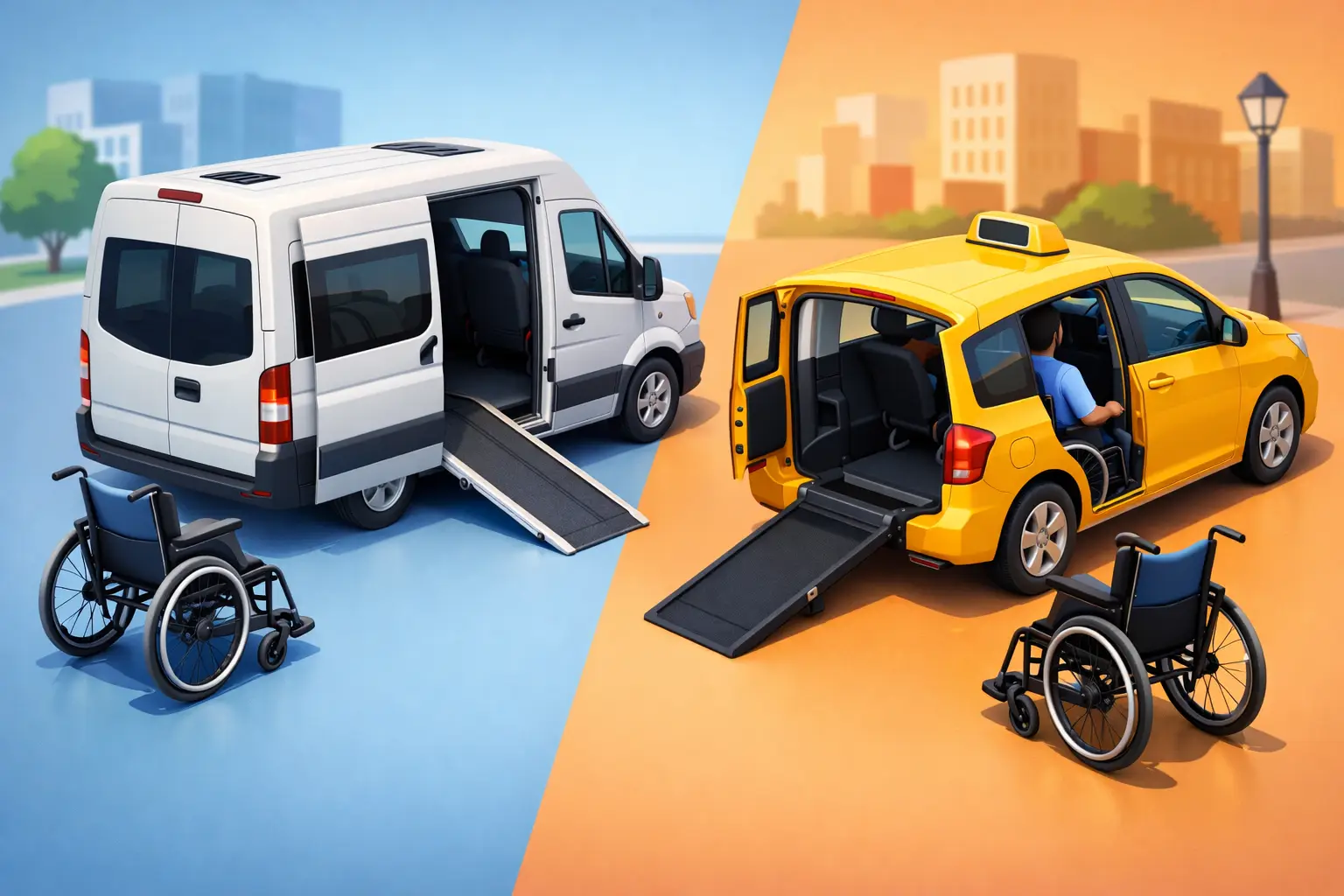
A journey can feel very different when getting into a vehicle means transferring out of a wheelchair, finding room for essential equipment, or relying on a driver to understand what help is wanted. When weighing up a wheelchair minibus versus taxi, the right choice is not simply about getting from A to B. It is about travelling safely, comfortably and with dignity.
For some short, straightforward trips, an accessible taxi may be perfectly suitable. For longer journeys, airport runs, family days out or appointments where comfort and space matter, a wheelchair-accessible minibus can offer a more reassuring option. The key is knowing what each service is designed to do before booking.
Wheelchair minibus versus taxi: the main difference
A standard taxi is usually designed to carry passengers who can transfer into a seat, with a boot for folding wheelchairs or other belongings. Some taxis are wheelchair accessible and may have a ramp, but vehicle layout, space and the level of support can vary considerably. It is never wise to assume that every taxi can carry a passenger safely while they remain in their chair.
A wheelchair-accessible minibus is purpose-built for more considered travel. With a ramp or lift, secure wheelchair restraints and suitable internal headroom, it allows a wheelchair user to stay in their own chair throughout the journey where appropriate. That can remove the physical strain and uncertainty of transferring, particularly for people with limited mobility or those travelling with specialist seating.
There is no one-size-fits-all answer. A taxi may suit a quick local trip for a passenger who is happy to transfer. A minibus often becomes the better choice where the journey is longer, more people are travelling, or remaining in the wheelchair makes the journey safer and more comfortable.
When a taxi may be the right choice
For a single passenger travelling a short distance with a folding wheelchair, a pre-booked taxi can be practical. It may be easier to arrange for a simple journey, such as a visit to a local shop, a meal out or an appointment nearby. If the passenger can comfortably transfer into a vehicle seat and does not need much luggage or equipment, a suitable taxi can meet the need well.
The important word is suitable. Let the provider know about the wheelchair, whether it folds, and whether anyone is travelling alongside the passenger. A family-run local operator should be happy to ask the right questions rather than treating the booking as just another job on an app.
Even on a short journey, comfort matters. Some passengers prefer the familiar support of their own wheelchair, while others find a vehicle seat more comfortable. The best arrangement depends on the person, their chair and their mobility needs.
Why a wheelchair minibus can make travel easier
A wheelchair minibus offers breathing room, both physically and practically. The passenger can remain seated in their wheelchair, which is secured correctly inside the vehicle. There is often more room for a companion, a carer, walking aids, bags, medication, oxygen equipment or luggage for a longer trip.
This makes a real difference for journeys that involve more planning. An airport transfer, for example, is already time-sensitive. Nobody wants to begin a holiday or an important flight worrying about whether their chair will fit, whether there is enough luggage space, or whether a transfer will be uncomfortable. With the right vehicle booked in advance, those details are dealt with before the day arrives.
The same applies to hospital appointments outside the local area, visiting family, theatre trips and days at the coast. A minibus gives passengers and companions the space to travel together without feeling squeezed in. It also allows the driver to provide calm, door-to-door help rather than rushing through a quick pick-up.
Staying in your own chair can protect comfort and confidence
For many wheelchair users, remaining in their own chair is not merely a convenience. It can be the safest and most comfortable position for the journey. The chair may provide postural support that a standard vehicle seat cannot, and avoiding transfers can reduce the risk of discomfort, fatigue or injury.
This is especially relevant where someone uses a powered wheelchair, a heavier manual chair, or a chair with adapted seating. These are not items to be folded away and treated like ordinary luggage. They need the right vehicle, secure restraints and a driver who understands that careful preparation is part of good service.
A properly equipped minibus should make the boarding process feel unhurried. The ramp is there to make access straightforward, while secure fixing points keep the wheelchair stable during travel. Passengers should feel looked after, not made to feel as though their needs are inconvenient.
Think about the whole journey, not only the mileage
Cost matters, but the cheapest-looking quote does not always represent the best value. A taxi fare may appear lower for a short route, yet extra complications can arise if the wrong vehicle turns up, the wheelchair does not fit as expected, or a companion has to travel separately.
A pre-booked wheelchair minibus may cost more in some cases because it requires specialist equipment, space and planning. However, that price can include the reassurance of knowing the vehicle is appropriate, the wheelchair can travel securely and everyone can travel together. For a long-distance journey or a day out, that confidence is often worth far more than a small saving.
Ask for a clear, fixed price before you book. It removes the uncertainty around changing fares, traffic-based pricing or unexpected charges. It also gives families, carers and organisations a straightforward way to plan transport costs in advance.
Questions worth asking before you book
The best bookings begin with a short conversation. You do not need to know every technical detail about the vehicle, but sharing a few basics helps the transport provider send the right one.
Explain whether the passenger will remain in the wheelchair, whether the chair is manual or powered, and whether it folds. Mention the approximate size or weight if you know it, along with any equipment travelling with you. Let the provider know how many other passengers are coming, whether assistance is needed at either end, and if there are timed appointments, flights or return collection times to work around.
It is also sensible to ask whether the vehicle has a ramp, proper wheelchair restraints and room for your party and luggage. If the answer is vague, keep looking. Accessible transport should never be a guesswork exercise.
The driver matters as much as the vehicle
The vehicle is only half the service. A ramp-equipped minibus is most useful when it is operated by a patient, professional driver who arrives on time, checks that the wheelchair is secured and gives passengers the time they need.
This is where a known local provider can feel very different from an anonymous booking platform. You can speak to a person, explain the journey properly and build trust over repeat trips. For regular hospital visits, school transport, contract work or family travel, that continuity is valuable. The driver learns what helps the passenger travel comfortably, while the passenger knows who is arriving at the door.
At Bright Star Travel, accessible journeys are planned around the person travelling, not fitted into a generic booking category. That means considering collection access, companions, luggage and the time needed to travel without pressure.
Choosing with confidence
Choose a taxi when the trip is simple, the passenger can transfer comfortably, and the wheelchair and luggage will fit safely. Choose a wheelchair minibus when staying in the chair is preferable, more space is needed, companions are travelling, or the journey deserves extra planning and support.
Most importantly, do not settle for transport that makes you feel rushed or uncertain. A good provider will listen first, ask sensible questions and make sure the vehicle suits the journey. When travel is arranged with care, the focus can return to where you are going and who you are going to see.