
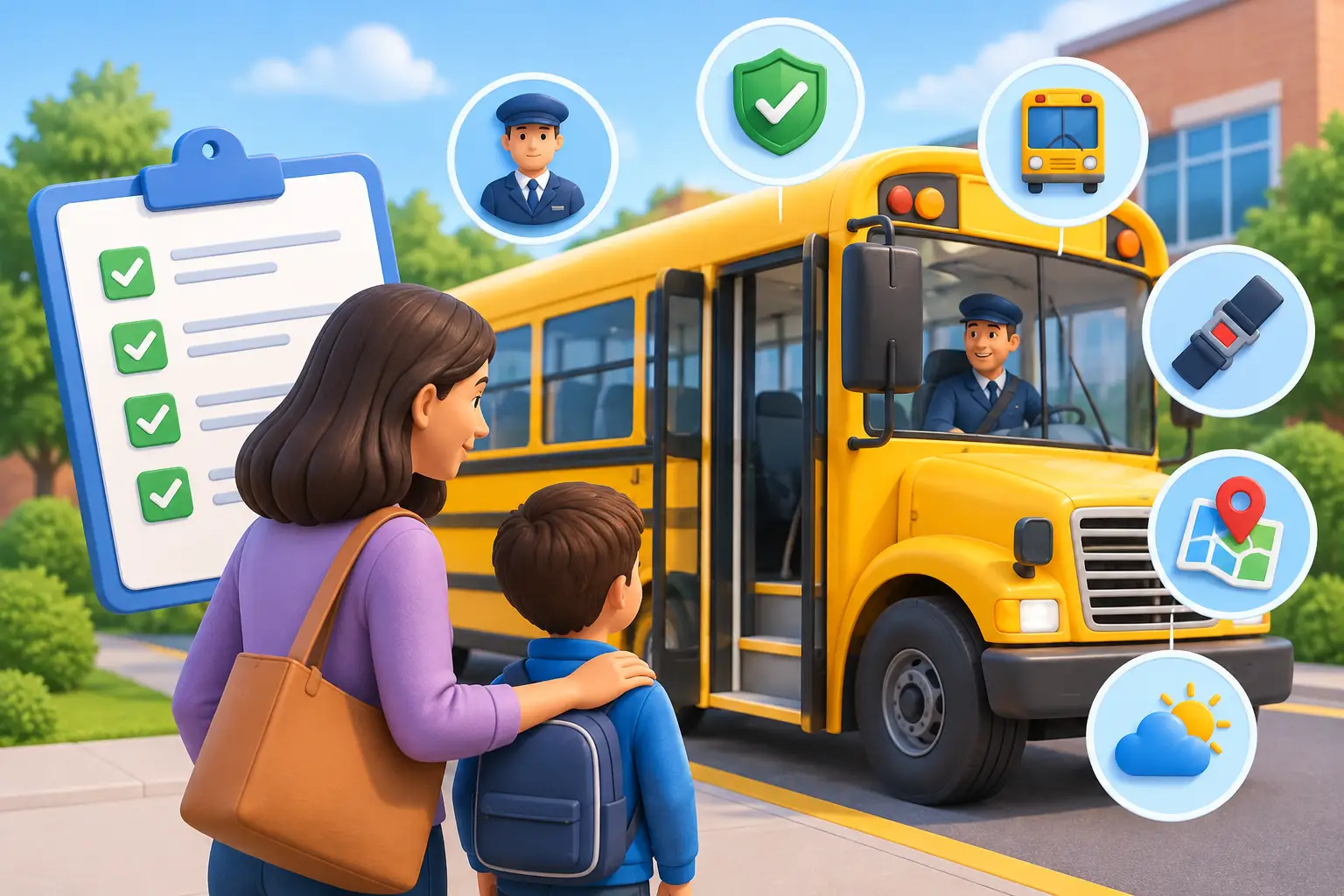
A school run is not just another journey. It is the part of the day when you hand responsibility for your child to someone else, often while you are already balancing work, younger children and the morning rush. The best school transport checks help you look beyond a low price or a convenient pick-up time and focus on whether a provider will turn up, communicate properly and treat every passenger with care.
For families in Sutton in Ashfield and the surrounding area, a pre-booked school journey should feel settled and familiar. Children should know who is collecting them, parents should know what to expect, and schools should be able to rely on sensible, professional arrangements. Here are the checks worth making before you commit.
1. Check who is actually driving your child
Start with the person behind the wheel. A reputable provider should be open about using experienced, professional drivers and should be happy to explain the checks and safeguarding processes relevant to the service. For regular school transport, consistency matters too. Seeing the same trusted driver makes a real difference, particularly for younger children or passengers who find changes to routine difficult.
Ask whether your child will usually travel with one named driver or a small, familiar team. There will always be occasions when cover is needed, but a good provider will tell you in advance where possible rather than leaving children and parents guessing at the kerbside.
You may also want to ask how drivers handle everyday situations: a child not appearing at the door, a road closure, or an authorised adult arriving late. The answer should sound calm, clear and centred on safety rather than simply keeping to a timetable.
2. Look closely at vehicle condition and suitability
A clean vehicle is not merely a nice extra. It is a visible sign that a transport provider takes pride in the journey and pays attention to the details. School transport vehicles should be well maintained, comfortable and suitable for the number and needs of the children travelling.
Ask what type of vehicle will be used and whether it has enough space for the route, passengers and any bags or equipment. A crowded vehicle may be cheaper to run, but it is rarely the most comfortable arrangement. For longer journeys, including school trips or transport to specialist provision, comfort becomes even more important.
If your child uses a wheelchair or has mobility needs, do not settle for vague assurances. Check that the vehicle is genuinely accessible, that boarding arrangements have been considered, and that your child can travel with dignity and without being expected to leave their chair. Accessible transport is about more than getting from A to B - it is about being welcomed and supported from door to door.
3. Ask how punctuality is managed, not just promised
Every school transport provider will say they are reliable. The more useful question is what they do to remain reliable when traffic is heavier than expected, roads are closed or the weather turns. A provider who plans routes carefully, allows sensible time and knows the local area is better placed to protect the schedule.
Confirm the agreed collection time and whether it is designed to get your child to school comfortably before registration, rather than cutting it fine every morning. For the return journey, establish where drop-off takes place and what happens if your child needs to be met by a parent, carer or another authorised person.
Punctuality should not mean rushing. The right service combines prompt arrivals with careful driving, enough time for safe boarding and a steady routine. It is one reason many families prefer a known local provider over a faceless taxi app, where the driver and vehicle can change from one booking to the next.
4. Make communication a non-negotiable
Clear communication is often what separates a good school-run arrangement from a stressful one. Before booking, find out who you can contact, how quickly they respond and what happens if you need to report an absence or change a collection instruction.
A reliable provider should make it straightforward to speak to a real person. That matters on a wet morning when your child is unwell, or when a family emergency means another adult will be collecting them later. You should not have to navigate an app or wait for an automated reply when a simple conversation would resolve the issue.
It is also sensible to agree the communication process for delays. No transport service can control every traffic incident, but parents deserve timely, honest updates. A short message explaining that the vehicle is safely delayed is far more reassuring than standing at the window wondering what has happened.
5. Confirm supervision and handover arrangements
The journey begins before the vehicle pulls away and ends only when your child has been handed over safely. Ask where the driver will collect and drop off, whether your child is expected to wait alone, and what procedure applies if nobody is available at the destination.
This is especially important for younger pupils, children with additional needs and routes involving busy roads. A door-to-door arrangement can remove a great deal of worry, but the details still need to be clear. For example, can the driver wait while a child gets through the school gate? Will they ring the bell at home, or should a parent be visible at the door?
There is no single arrangement that suits every family. Older teenagers may need a straightforward, independent service, while a younger child may need a more personal handover. The best provider listens to what is appropriate for your family and puts the plan in place from the start.
6. Understand the price and the booking commitment
School transport is often arranged over a term, a school year or through an ongoing contract. That makes transparent pricing essential. Ask for the fixed price, what it covers and how payments are handled. You should also understand the notice required if your circumstances change, as well as the approach to school holidays, inset days and unexpected closures.
The cheapest quote is not always the best value. A slightly higher fixed price may include the certainty of a maintained vehicle, a dependable driver, direct contact and a provider who knows your child’s usual arrangements. By contrast, a price that looks attractive at first can become frustrating if it comes with cancellations, poor communication or changing drivers.
For schools, clubs and organisations arranging regular transport, it is worth confirming the invoicing process and who is responsible for making amendments. A clear contract arrangement keeps administration manageable and avoids confusion for families.
7. Trust the questions a provider asks you
A caring transport provider will not simply take a postcode and payment details. They will ask the practical questions needed to make the service safe and suitable: your child’s age, collection address, school times, emergency contacts, mobility requirements and any information that affects the journey.
That does not mean families need to share more personal information than necessary. It means the provider should have enough detail to plan responsibly and respond properly if something unusual happens. If your child has a particular routine, is anxious about travelling, or needs help with access, say so at the booking stage. A thoughtful provider can only tailor the journey when they understand what will help.
At Bright Star Travel, regular transport is approached as a relationship, not a booking number. That is the standard parents should expect from any school-run service: familiar faces, well-kept vehicles, dependable times and someone accountable at the end of the phone.
A final check before the first journey
Before the first day, make sure your child knows who is collecting them, what vehicle to look for and what to do if plans change. Save the provider’s contact number, confirm your emergency contacts are current and talk through the routine in a calm, positive way.
The right school transport arrangement gives children a confident start and gives parents one less thing to worry about before the day has properly begun. When care, communication and punctuality are built into the service, the school run becomes a dependable part of family life rather than a daily question mark.